
Diary of the BIG Lappers
What nobody tells you about your first weeks in a caravan
Reversing under pressure, reading the warning lights and learning that the water filter definitely has a right way around. Hi, we’re Grace and Matt, two teachers taking on a year-long lap of Australia as part of The BIG Aussie Review.
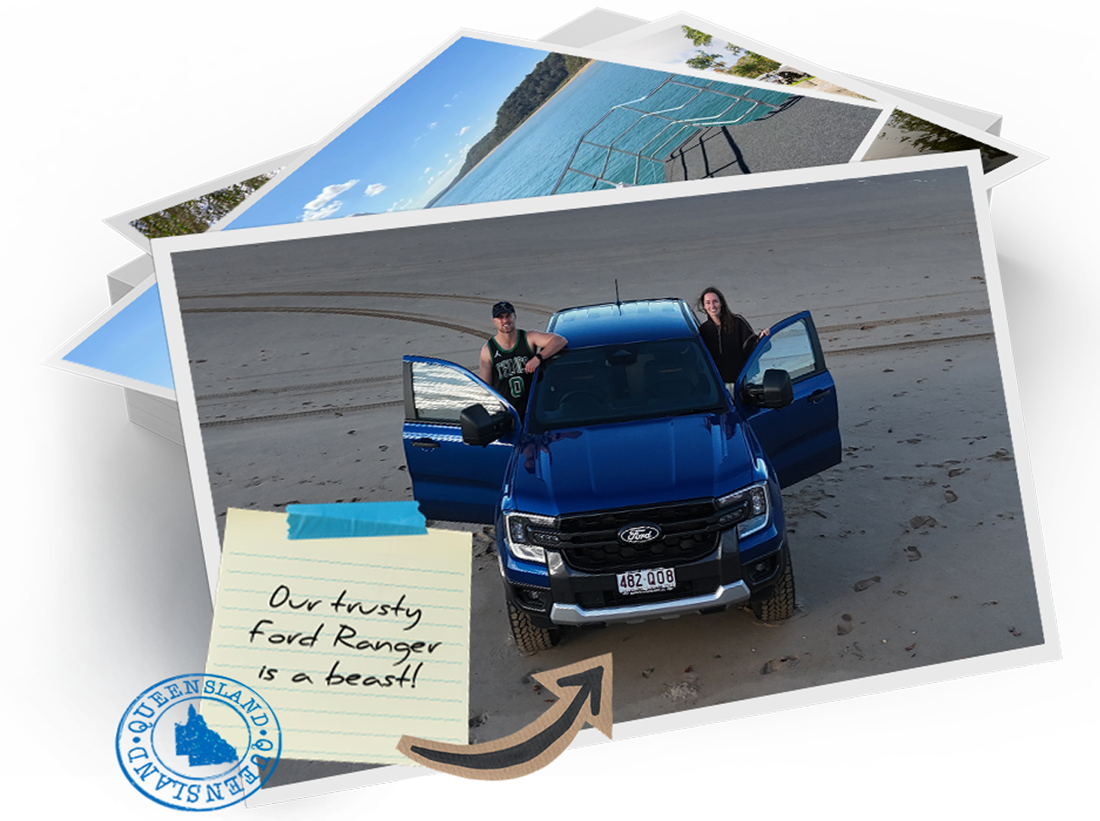
Since starting our BIG Lap on the Gold Coast, we’ve put the water filter on backwards, nearly lost a drone over a cliff and discovered that warning lights generally appear for a reason.
Here’s what our first few months as caravanners have really looked like.
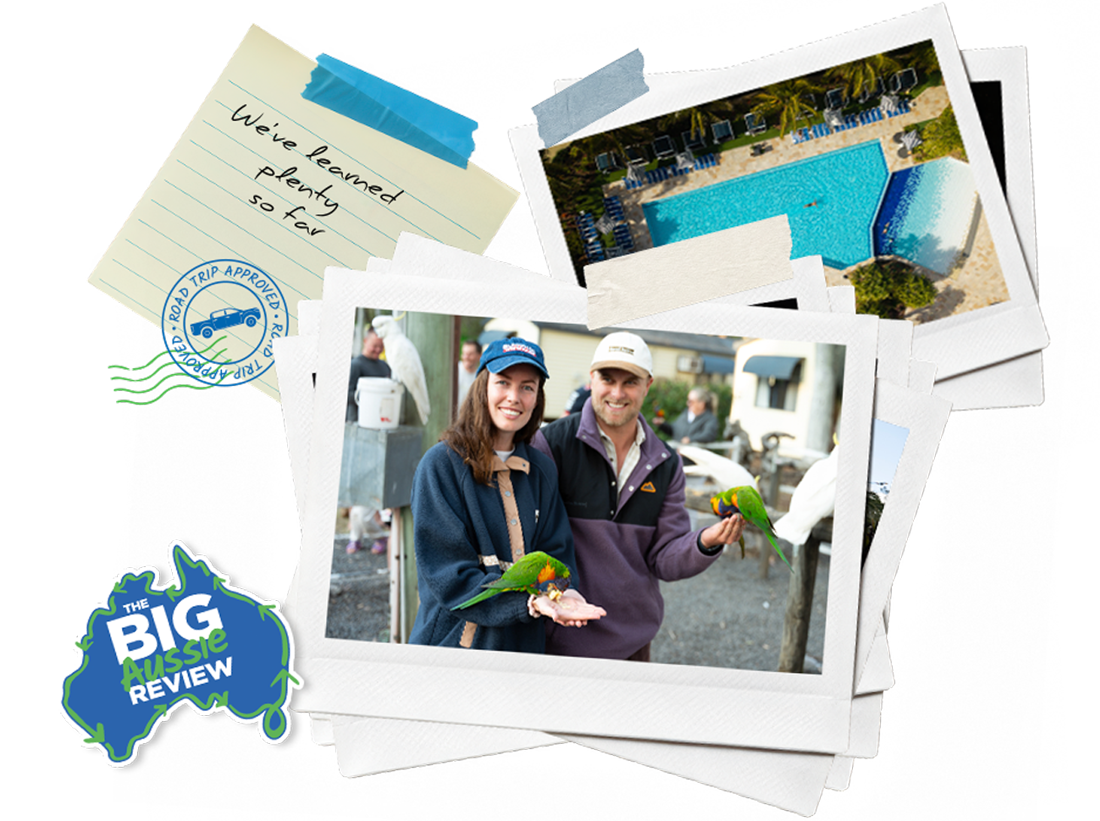
Meeting some locals at BIG4 Cania Gorge Holiday Park, QLD
Reversing is a team sport
During our initial training, we quickly discovered that reversing a caravan wasn’t quite as logical as we expected.
In Grace’s mind, keeping the steering wheel straight should have sent the caravan straight backwards. As it turns out, that isn’t necessarily how it works.
Then came the added pressure of reversing into an actual site.
One thing nobody tells you is that reversing a caravan can quickly become a spectator sport. People seem to appear from nowhere just as you’re attempting to squeeze into a site. Being a young couple, we sometimes get the feeling everyone is waiting to see what might go wrong.
We’ve found that using radios or staying on a phone call makes it much easier for the person behind the caravan to guide the driver. It’s far more effective than shouting across a busy park and hoping the other person hears ‘left’ rather than ‘right’.
We’re still learning, but these days we focus on our system and try to forget about the audience.
Pro tip: Agree on simple directions before reversing and use radios/phones so you can hear each other clearly. Most importantly, ignore the spectators.
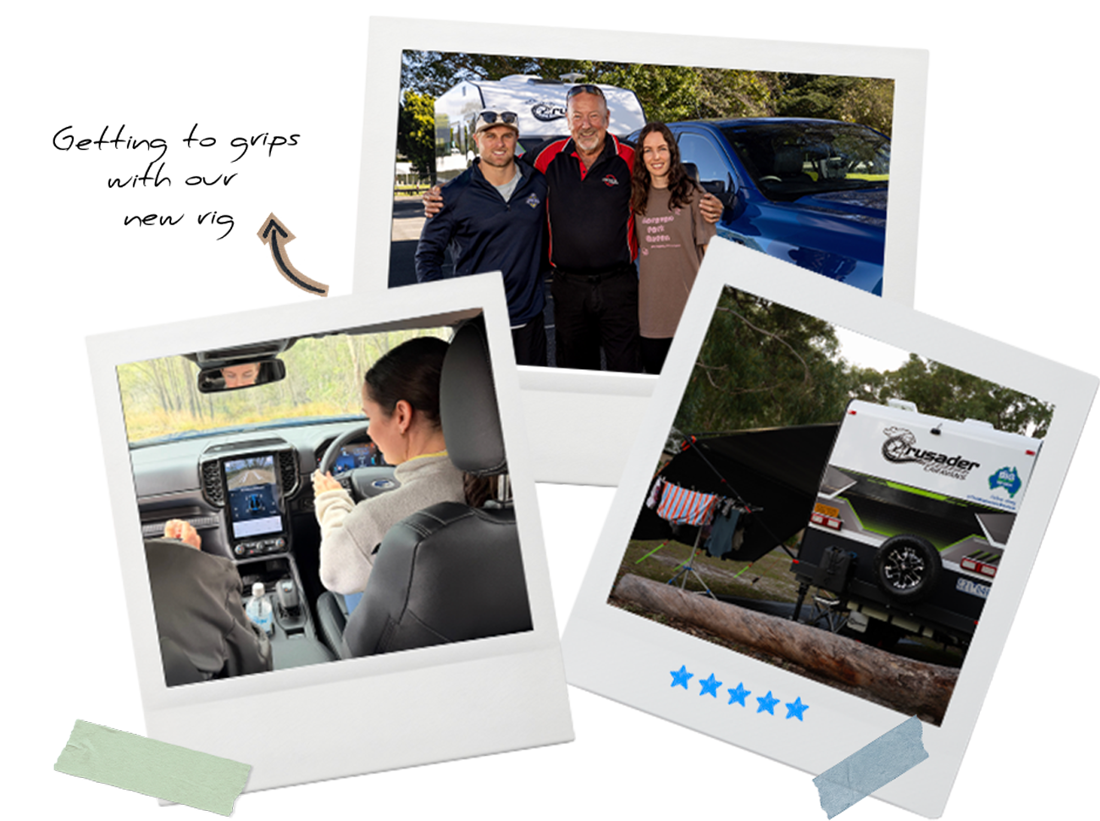
Training to tow and drive off-road was a big help!
Poor water pressure problems
At one park, the water pressure in our caravan was terrible.
The shower produced little more than a dribble, but we assumed it was the park’s water pressure. We decided to put up with it and spent two nights taking some very underwhelming showers.
Before leaving, Matt finally headed outside to check the hose. That’s when we discovered the real problem: Grace had installed the water filter backwards.
The park’s water pressure was perfectly fine. Our setup was not.
Unfortunately, we can’t even claim this was a once-off mistake. It’s happened twice.
Lesson learned: Before blaming the park, check your own setup. If the water pressure suddenly seems worse than usual, make sure the hose is connected properly, and the filter is facing the right direction.
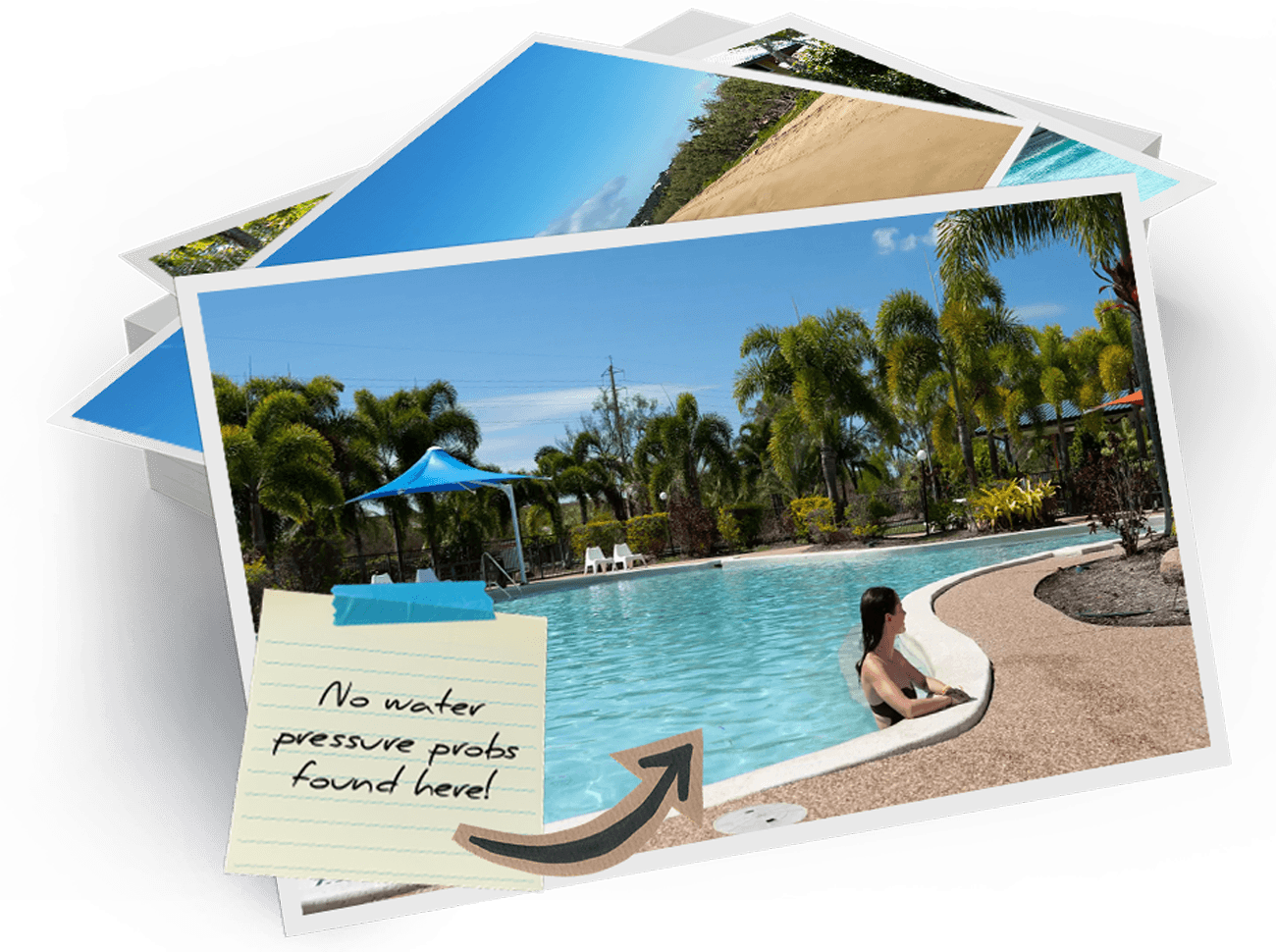
The inviting pool at BIG4 Ingenia Holidays Townsville, QLD
The drone versus Matt
Only a week or so into the trip, we were still learning how to use all our new equipment. That included the drone.
While abseiling near Caloundra, one wrong movement of the controls sent it over the edge of a 50m cliff. One moment it was flying and the next it had disappeared somewhere down the cliff face. We were convinced it was gone for good.
Thankfully, Angus from BIG4 Caloundra Waterfront was able to retrieve it. Somehow, it escaped without any damage.
You’d think that would be the end of our early drone drama, but the drone had other ideas.
During a later landing, it became unsteady and Matt instinctively reached out to catch it. That was not a great idea. The drone caught his hand, leaving the score between the two of them at one-all.
We still love capturing the places we visit from the air, but we’re now much more careful about where and how we fly.
Don’t do this: Never try to catch a moving drone. No video is worth putting yourself or your equipment at unnecessary risk.
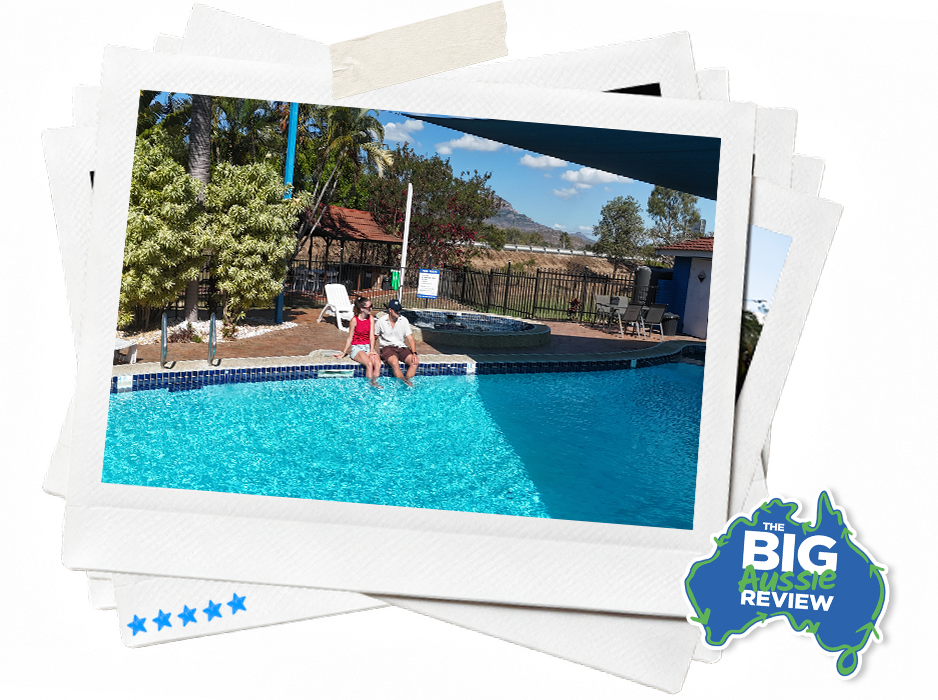
View of the pool from the drone at BIG4 Townsville Gateway Holiday Park, QLD
The warning light we should have taken seriously
Another early learning curve involved the caravan toilet.
A warning light appeared that we hadn’t seen before. Instead of stopping to work out what it meant, we went with the classic ‘she’ll be right’ approach.
She was not right.
It turns out the toilet cassette hadn't clicked into place properly and was causing the warning light. We’ll spare you the finer details, but the cassette area and floor required a very thorough clean. It’s not a mistake we’re keen to repeat. Disregard warning lights at your own peril, or you could find yourself in the proverbial 'you know what', literally!
Key takeaway: If a warning light appears or something doesn’t click into position properly, stop and check it. Those little signs usually exist for a reason.
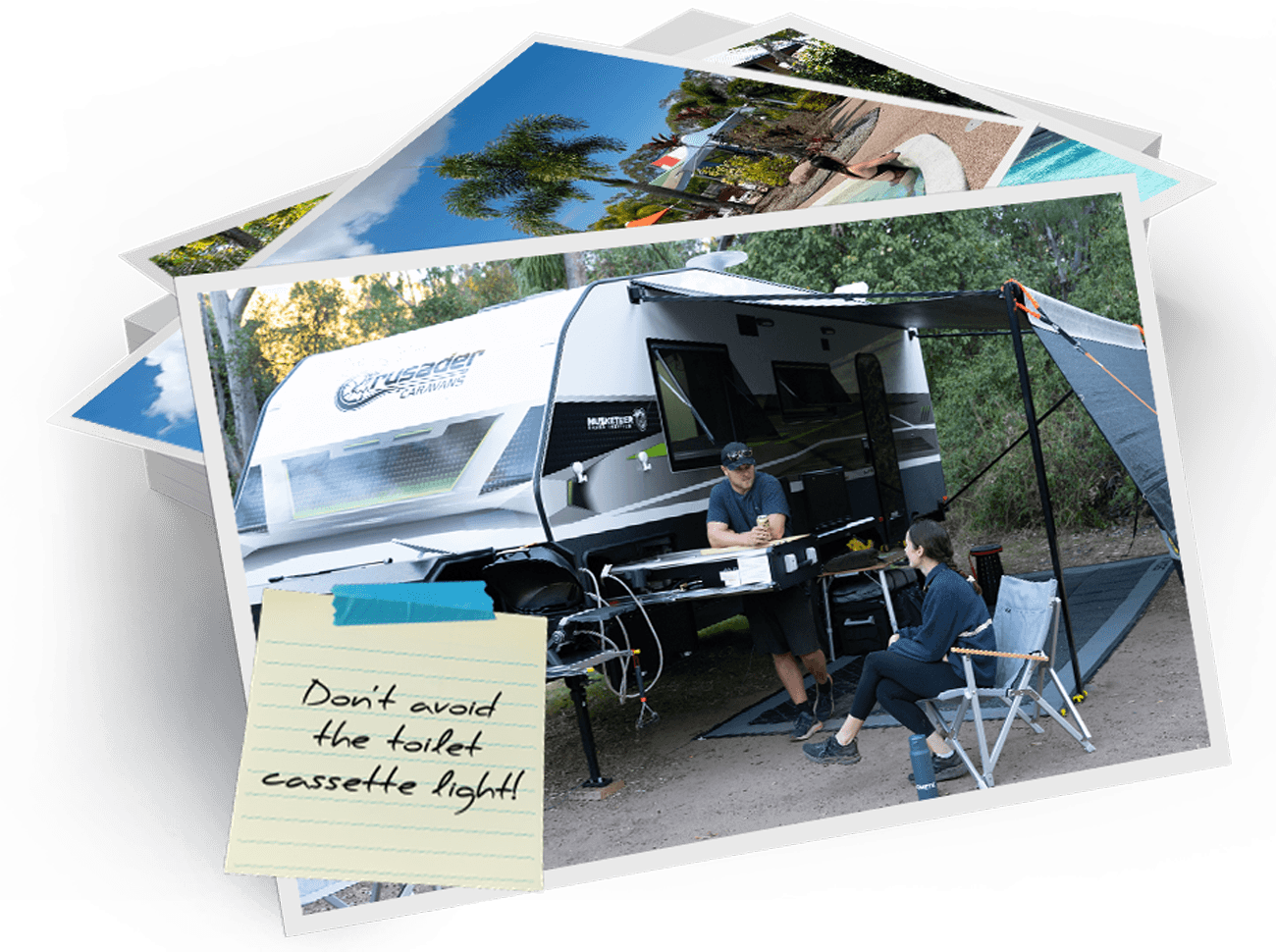
Relaxing at BIG4 Carnarvon Gorge Holiday Park, QLD
What we packed vs. what we use
Before leaving, we packed for almost every situation we could imagine. After a few months on the road, we’ve realised we use much less than we thought we would.
Clothing is the best example. We brought plenty of options but now rotate through the same few comfortable outfits. Life in the caravan is pretty casual, and most of those ‘just in case’ clothes spend their time taking up valuable space.
On the other hand, some caravan features have proven far more useful than expected. Having a washing machine in our Crusader makes life much easier, while the Dometic slide out outdoor kitchen lets us cook outside and enjoy our surroundings. We still use the oven regularly, but having both options helps the caravan feel more like home.
If we packed again, we’d bring fewer clothes and spend more time thinking about what would make everyday life easier.
Packing tip: You probably don’t need as many clothes as you think. Comfortable outfits and practical features will get far more use than most ‘just in case’ items.
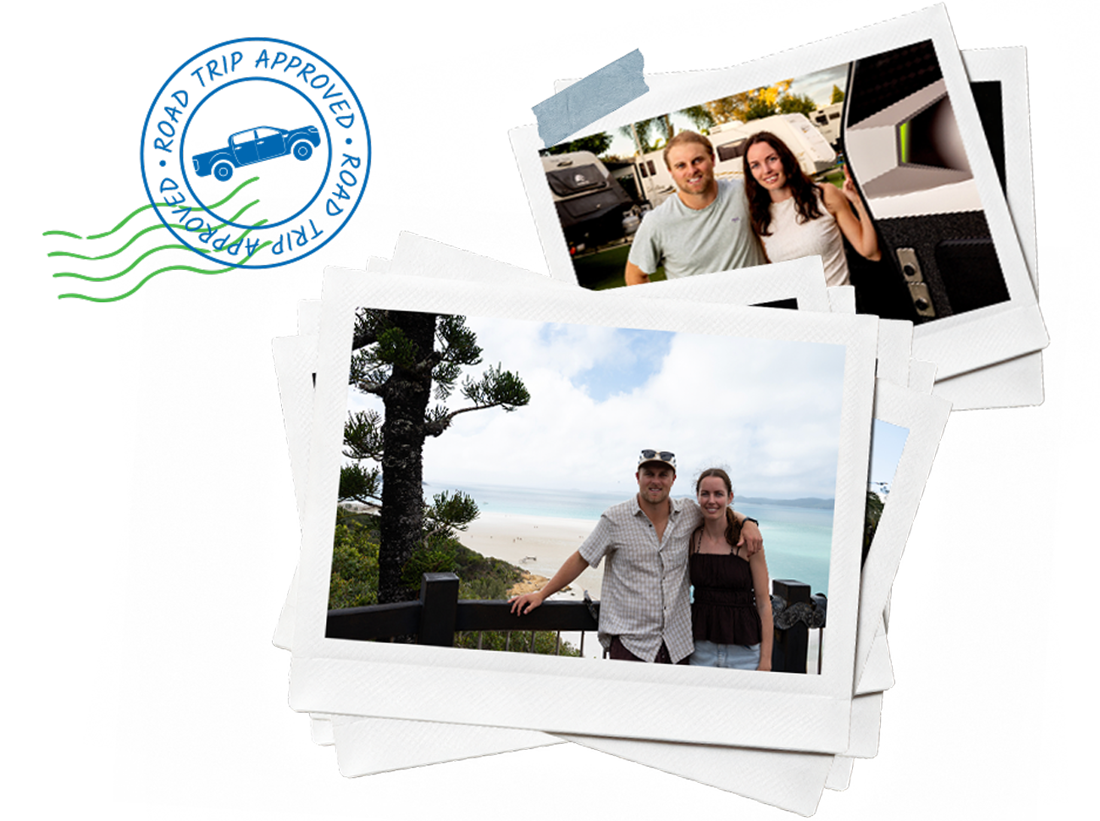
Don’t be afraid to ask for help
One of the best things we’ve learned is that you don’t need to pretend you know what you’re doing.
At BIG4 Mackay Blacks Beach Holiday Park, our jockey wheel housing kept slipping while we were packing up. Instead of leaving us to struggle, people around the park stepped in.
One person brought over blocks, another had a tool that could help straighten it and someone else gave us directions to the nearest automotive store. They even made sure the store had enough room for the caravan.
We’ve quickly discovered that every caravanner has advice, particularly when it comes to towing and setting up. Not all of it is identical, so we listen, ask questions and take the parts that make sense for our vehicle, caravan and travel style.
The same goes for local knowledge. Before beach driving at Rainbow Beach, we stopped at a local surf shop for advice. The team explained which areas to avoid and how not to end up bogged or on the local ‘wall of shame’.
That conversation gave us much more confidence than simply turning onto the beach and hoping for the best.
First-timer tip: Ask for help and listen to the people who know the area. One conversation can save a lot of time, frustration and potentially an expensive recovery job.
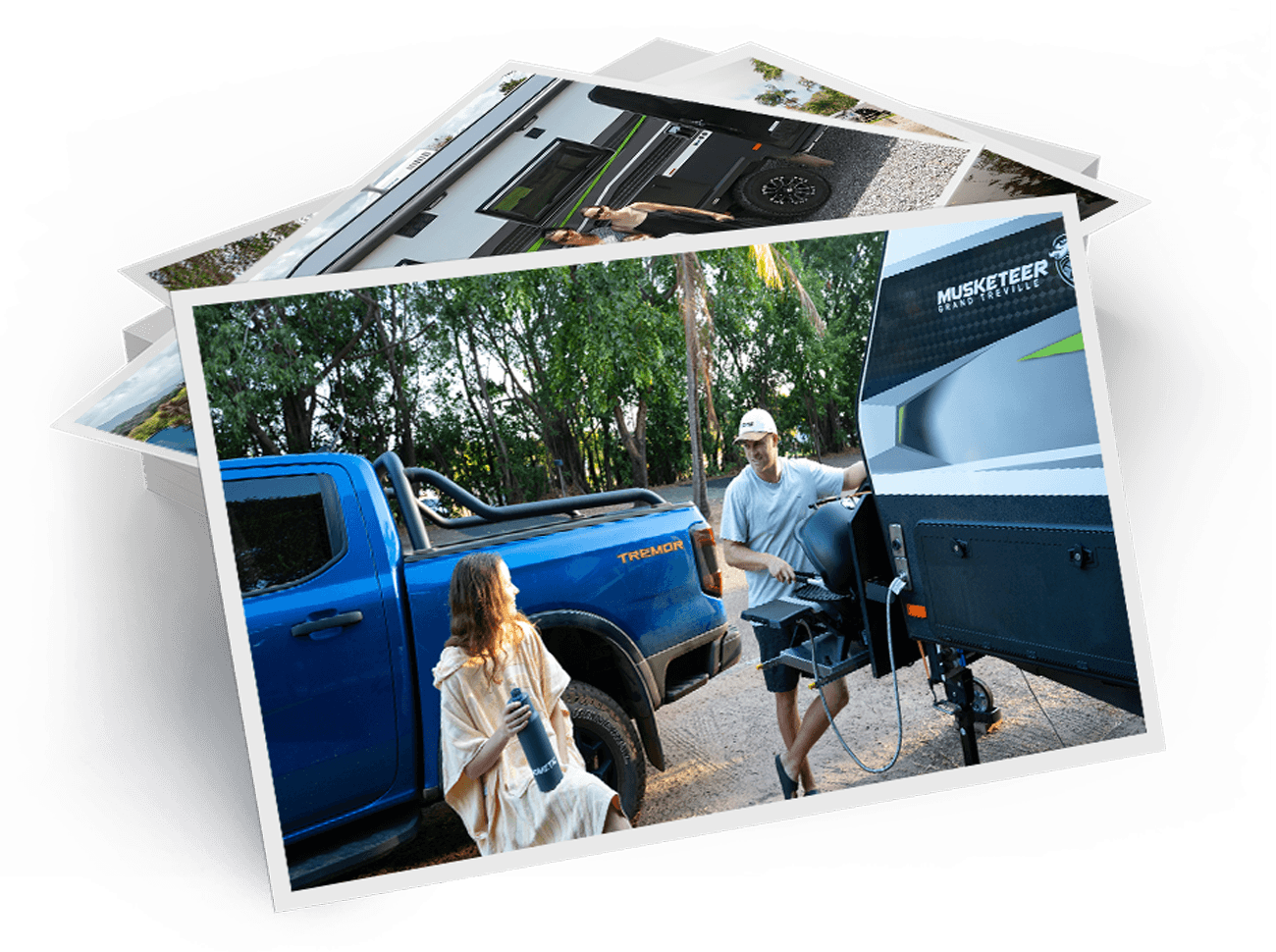
Cooking up a storm at BIG4 Hidden Valley Holiday Park, NT
Starting to find our rhythm
Our first few months on the road have involved plenty of steep learning curves, but we’re gradually finding a routine.
We’re getting better at setting up, packing down and planning travel days. We’re also learning how to balance driving, activities, cooking and creating content without trying to cram everything into every day.
There will definitely be more mistakes. Hopefully, there will also be fewer backwards water filters and ignored warning lights.
Becoming a caravanner doesn’t happen the moment you collect the keys. It happens through every awkward reverse, helpful conversation, unexpected problem and small win along the way.
We’re still beginners. We’re just slightly more experienced beginners than when we left the Gold Coast.
Final lesson: Expect to make mistakes, ask plenty of questions and give yourself time to work things out. Learning as you go is all part of the lap.
And with plenty more of Australia ahead of us, we’re sure the lessons have only just begun!


Related Parks


